Skip to content
Lower your energy costs, increase your independence: discover how a BESS can protect your business against expensive grid charges and price fluctuations.









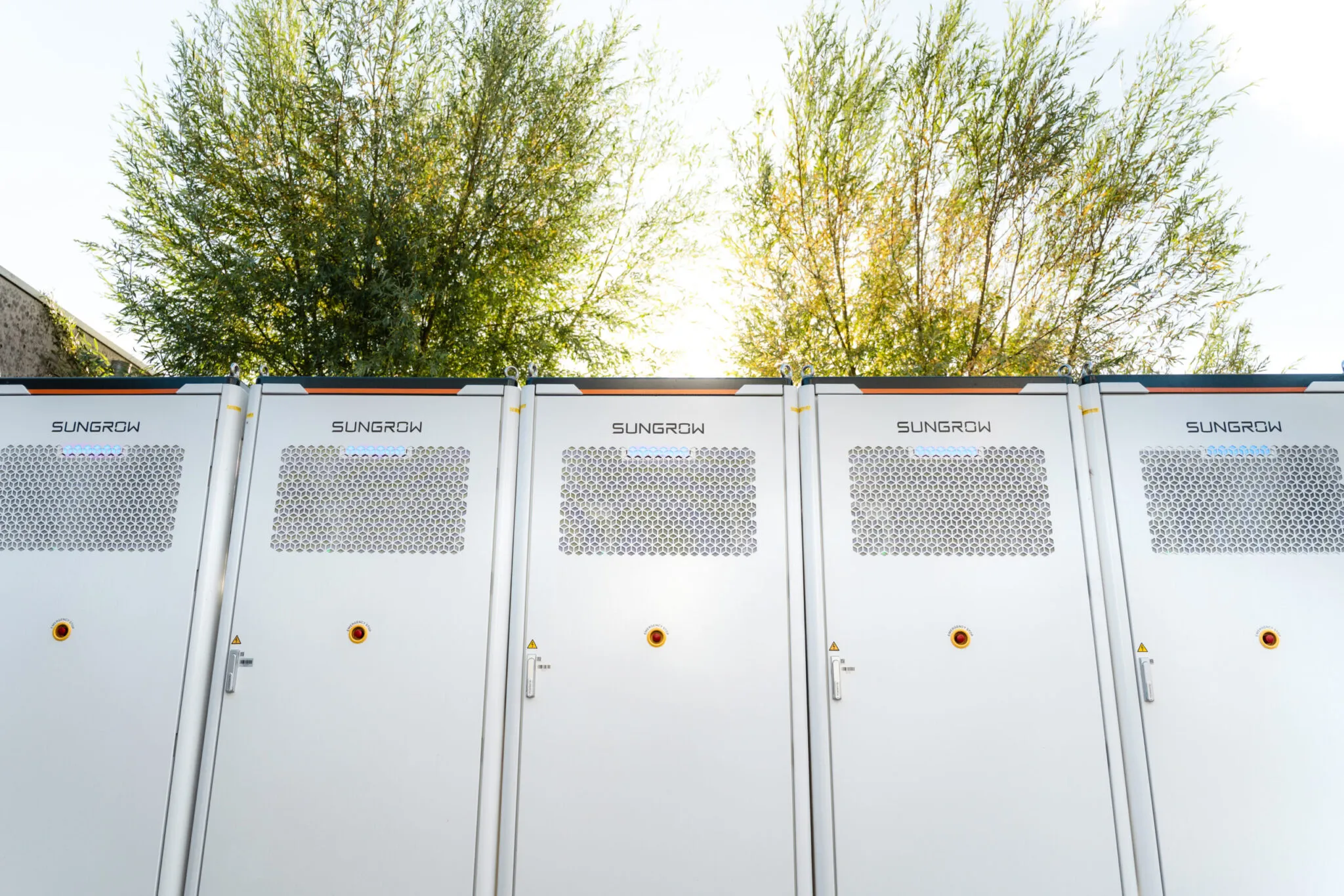
BESS simply stands for Battery Energy Storage System. In plain language: a smart battery that stores energy when it’s cheap (for example, when solar panels are producing excess power) and releases that energy when it’s cost-effective to do so (during expensive peak hours or when the grid is under strain).
Those who choose BESS today are choosing not only sustainability, but also control, efficiency, and financially sound energy management.
An industrial battery, or Battery Energy Storage System (BESS), is more than just a battery. It is a complete energy system that:
Get more out of your energy: discover how a BESS can help your business manage electricity more intelligently and cost-effectively.
Every month, you pay a substantial amount in capacity charges. With a BESS, you can offset those expensive peaks. The battery kicks in during peak times, and your grid rates drop significantly.
Does your company have solar panels? Perfect! But what happens to excess energy? With a Battery Energy Storage System, you can store that energy for when the sun isn't shining. The result: self-consumption that can increase from 30% to 70% or more.
Up to 40%
A BESS without smart control is like a car without a steering wheel. Our Battery Energy Storage Systems are equipped with advanced Energy Management Systems that constantly determine:
A Battery Energy Storage System can not only save costs, but also generate revenue:
On the day-ahead market, energy prices are set one day in advance. In this market, price differences of more than 130 €/MWh are possible, depending on supply and demand. Market participants can anticipate these fluctuations by adjusting their production or consumption in a timely manner to account for expected price changes.
Anyone who deviates from their submitted daily schedule ends up on the imbalance market. Grid operators also rely on grid support services such as FCR (Frequency Containment Reserve) and aFRR (Automatic Frequency Restoration Reserve) to ensure grid frequency and system stability.
Fluvius offers congestion services when local capacity issues arise on the distribution grid. Market participants who reduce their consumption or delay feed-in at the right time help ensure a more stable grid. In exchange, they receive compensation. These services are becoming increasingly important as more renewable generation and electric consumers are connected to the grid.
The energy market uses various pricing systems based on timing and flexibility. While the day-ahead market offers predictability, you can earn high compensation on the imbalance market by responding strategically to grid imbalances.


More than 10,000 satisfied customers!

Excellent technical support. Quick quote and competitive pricing. Clean, high-quality work. A company I would recommend. Service first!

Fantastic team…the installation work was done very carefully…clear agreements that were honored…and very good prices, too! Top-notch company!!
Excellent service!
The quote, installation, and after-sales service all went very smoothly!

The most fantastic company I've ever worked with. From the customer service representatives on the phone to the installers—they all have just one goal: A SATISFIED CUSTOMER!
From the initial consultation to the installation, everything was perfect. Clear, accurate information; professional service. They really work with the customer to find the best solution. Highly recommended.
Perfect service. We received clear information in advance, including a site visit from the project engineer. The installation went very smoothly, and in my opinion, the staff was very knowledgeable.

I am extremely satisfied with the service provided. This company is customer-friendly, helpful in finding appropriate solutions, and highly competent.
Last week, Energyking installed a charging station at our home. The installation took place at the agreed-upon time, and the staff were friendly and professional.
We are very satisfied with our partnership with EnergyKing. Jo gave us a very clear explanation. Even after the installation, EnergyKing is always there for us!

A company you can count on! Efficient scheduling, friendly service, clear information both over the phone and in person, and always available to answer questions.

I just had an air conditioner installed by Energyking. Very satisfied!! Efficient workflow. Installed perfectly, finished neatly—and all at a competitive price!

Fast and professional service, and a very customer-friendly company! Thanks, Brecht, Joren, and Jan!
Energyking just finished installing a ground-water heat pump. For a relatively young company, they show a lot of maturity! I definitely recommend them.
I had an air conditioner installed by the team at Energyking. From our first contact through to the installation, everything went smoothly. Very professional work.
Everyone was very friendly, both on the phone and the people who came to give me a quote. Whenever I had questions, they were always there to help. I’m very satisfied!
Until March 2023, there was a 200% tax credit for companies that installed charging stations. They installed 22 professional charging stations. High quality, fast, and at a great price!

We are very satisfied with the proper and precise execution of the work, the fulfillment of agreements, and the responses to our questions and comments.
We contacted several companies about installing a charging station. We chose EnergyKing because their quote was clear and communication was smooth.
We're very satisfied with this partnership. Communication went smoothly, and our solar panels were delivered quickly (compared to other companies)! Top-notch service.
I had a very pleasant experience working with EnergyKing, which was recommended by a friend. Clear communication, quick installation, and the quote and invoice were straightforward.
A top-notch experience from start to finish. They followed through perfectly on all agreements, promises, and timelines, with excellent communication! I’m really, really satisfied with this company!

Our solar panels were installed last December. The technicians were very friendly and worked efficiently. I am very satisfied with my installation.

From the initial consultation to installation and inspection, everyone involved was highly skilled and knew how to get the job done. It was a complete end-to-end process with excellent communication throughout.

A Battery Energy Storage System (BESS) has an average lifespan of 20 years and comes with a warranty of 10 years or 6,500 to 10,000 charge cycles, depending on the model. After that period, the battery is not unusable; it typically retains about 70% of its original capacity, allowing it to continue functioning within your business.
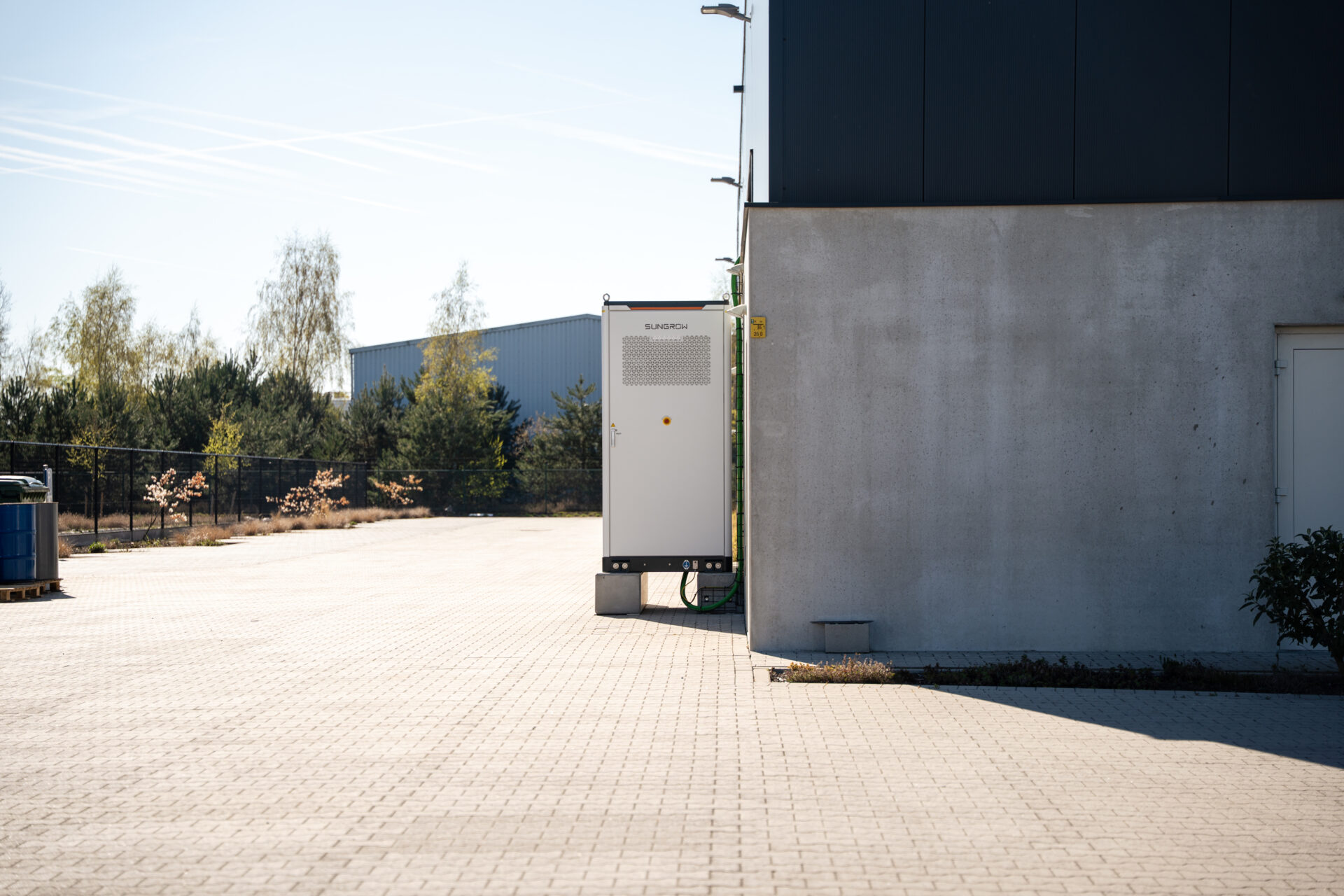
Our battery solutions are weather-resistant and suitable for outdoor installation without the need for additional protection. We also offer service plans to properly maintain the system and maximize its lifespan.
We’ll conduct an energy assessment of your business, analyzing your consumption profile, peak consumption, and any energy generated by solar panels, among other factors. Based on that data, we’ll propose a number of battery solutions or scenarios.
We compare these scenarios with one another, and then, together with you, we select the system that is best tailored to your company’s needs and future plans.
Request your free energy scan and find out which battery system offers the best return on investment for your business.
Yes, under certain conditions, companies are eligible for subsidies and tax incentives when purchasing a BESS:
The average payback period for a battery energy storage system (BESS) for businesses is approximately 5 years. That period may vary depending on:
To keep the payback period as short as possible, we use smart control systems. We also recommend a dynamic energy contract, so you can manage your battery intelligently based on market prices.
We would be happy to provide a customized return analysis for your situation.
Yes, all of our BESS systems are equipped with built-in fire detection and suppression systems. The battery is continuously monitored and features multiple layers of protection, such as temperature detection, CO sensors, and overvoltage protection. If any abnormalities are detected, the system automatically switches to safety mode to prevent risks. This ensures you have a safe and reliable installation.
That depends on the specific situation at your business location. In many cases, no permit is required, but there are a few exceptions you should be aware of:

It costs money!
Please feel free to contact us. We'd be happy to help you!