 Skip to content
 - Home Battery Installer
Your home battery, tailored to your energy usage and solar panels
Want to have a home battery installed? Store your solar energy, lower your bill and become less on the grid. Request a free quote with no obligation.
- Save more on your energy bill
- Free advice and a customized quote
- Top brands (Alpha ESS, Sungrow, and Enphase) with a warranty
- Installation by a certified installer
Enter your information
One of our energy experts will visit your home—with no obligation—to assess the options available to you.
Get a free quote for a home battery in just 1 minute!

Why is a home battery a good option?
Your solar panels generate the most power during the day, which is often when you’re not at home. Your excess power is then fed into the grid at a feed-in tariff that’s often much lower than what you pay for electricity.
In the evening, when you’re cooking, the washing machine is running, and the lights are on, your solar panels aren’t producing any power—or are producing very little—and you’re buying expensive electricity from the grid.
A home battery fills that gap: it stores your surplus energy from during the day, so that in the evening you can use your own solar energy instead of feeding it into the grid at a low rate and buying it back at a high rate.
- You'll use more of your own solar energy
- You're selling less electricity at a rate that's too low
- You smooth out your consumption peaks for the capacity rate
How much does a
home battery cost?
- Now starting at €3,995 excl. VAT
The price of a home battery depends mainly on its capacity (in kWh), the brand, and whether any modifications to your system are needed. The larger the battery, the higher the price, but the lower the price per kWh.
Our entry-level model is a 5 kW Sungrow home battery with a capacity of 5.12 kWh—a great way to cover your evening energy needs. Starting at €7,995, you can get a full-featured Alpha ESS home battery with 10 kW and 18.6 kWh, which is more than enough for families with average energy consumption.
kW or kWh? What's the difference?
Power (kW) indicates how quickly your battery can charge and discharge.
Capacity (kWh) indicates how much energy it can store.


How much capacity do you need?
Choosing the right capacity is a balancing act: a battery that’s too small will run out too quickly in the evening; a battery that’s too large will never fully charge. Three factors determine which capacity is right for you:
- Your power consumption is the amount of energy your battery needs to supply.
- The capacity of your solar panels. The more you generate, the more surplus energy you have to store. A larger PV system justifies a larger battery.
- Your family situation and future plans. Do you have a heat pump, an electric car, or plans to get one? If so, your energy consumption will increase, so you should choose a slightly larger plan.


- Reviews
What our customers say
More than 10,000 satisfied customers!

Excellent technical support. Quick quote and competitive pricing. Clean, high-quality work. A company I would recommend. Service first!

Fantastic team…the installation work was done very carefully…clear agreements that were honored…and very good prices, too! Top-notch company!!
Excellent service!
The quote, installation, and after-sales service all went very smoothly!

The most fantastic company I've ever worked with. From the customer service representatives on the phone to the installers—they all have just one goal: A SATISFIED CUSTOMER!
From the initial consultation to the installation, everything was perfect. Clear, accurate information; professional service. They really work with the customer to find the best solution. Highly recommended.
Perfect service. We received clear information in advance, including a site visit from the project engineer. The installation went very smoothly, and in my opinion, the staff was very knowledgeable.

I am extremely satisfied with the service provided. This company is customer-friendly, helpful in finding appropriate solutions, and highly competent.
Last week, Energyking installed a charging station at our home. The installation took place at the agreed-upon time, and the staff were friendly and professional.
We are very satisfied with our partnership with EnergyKing. Jo gave us a very clear explanation. Even after the installation, EnergyKing is always there for us!

A company you can count on! Efficient scheduling, friendly service, clear information both over the phone and in person, and always available to answer questions.

I just had an air conditioner installed by Energyking. Very satisfied!! Efficient workflow. Installed perfectly, finished neatly—and all at a competitive price!

Fast and professional service, and a very customer-friendly company! Thanks, Brecht, Joren, and Jan!
Energyking just finished installing a ground-water heat pump. For a relatively young company, they show a lot of maturity! I definitely recommend them.
I had an air conditioner installed by the team at Energyking. From our first contact through to the installation, everything went smoothly. Very professional work.
Everyone was very friendly, both on the phone and the people who came to give me a quote. Whenever I had questions, they were always there to help. I’m very satisfied!
Until March 2023, there was a 200% tax credit for companies that installed charging stations. They installed 22 professional charging stations. High quality, fast, and at a great price!

We are very satisfied with the proper and precise execution of the work, the fulfillment of agreements, and the responses to our questions and comments.
We contacted several companies about installing a charging station. We chose EnergyKing because their quote was clear and communication was smooth.
We're very satisfied with this partnership. Communication went smoothly, and our solar panels were delivered quickly (compared to other companies)! Top-notch service.
I had a very pleasant experience working with EnergyKing, which was recommended by a friend. Clear communication, quick installation, and the quote and invoice were straightforward.
A top-notch experience from start to finish. They followed through perfectly on all agreements, promises, and timelines, with excellent communication! I’m really, really satisfied with this company!

Our solar panels were installed last December. The technicians were very friendly and worked efficiently. I am very satisfied with my installation.

From the initial consultation to installation and inspection, everyone involved was highly skilled and knew how to get the job done. It was a complete end-to-end process with excellent communication throughout.


Why Choose EnergyKing
With 25 years of experience, EnergyKing works exclusively with reliable, top brands. This ensures you get quality that will last for years.
Smart Control
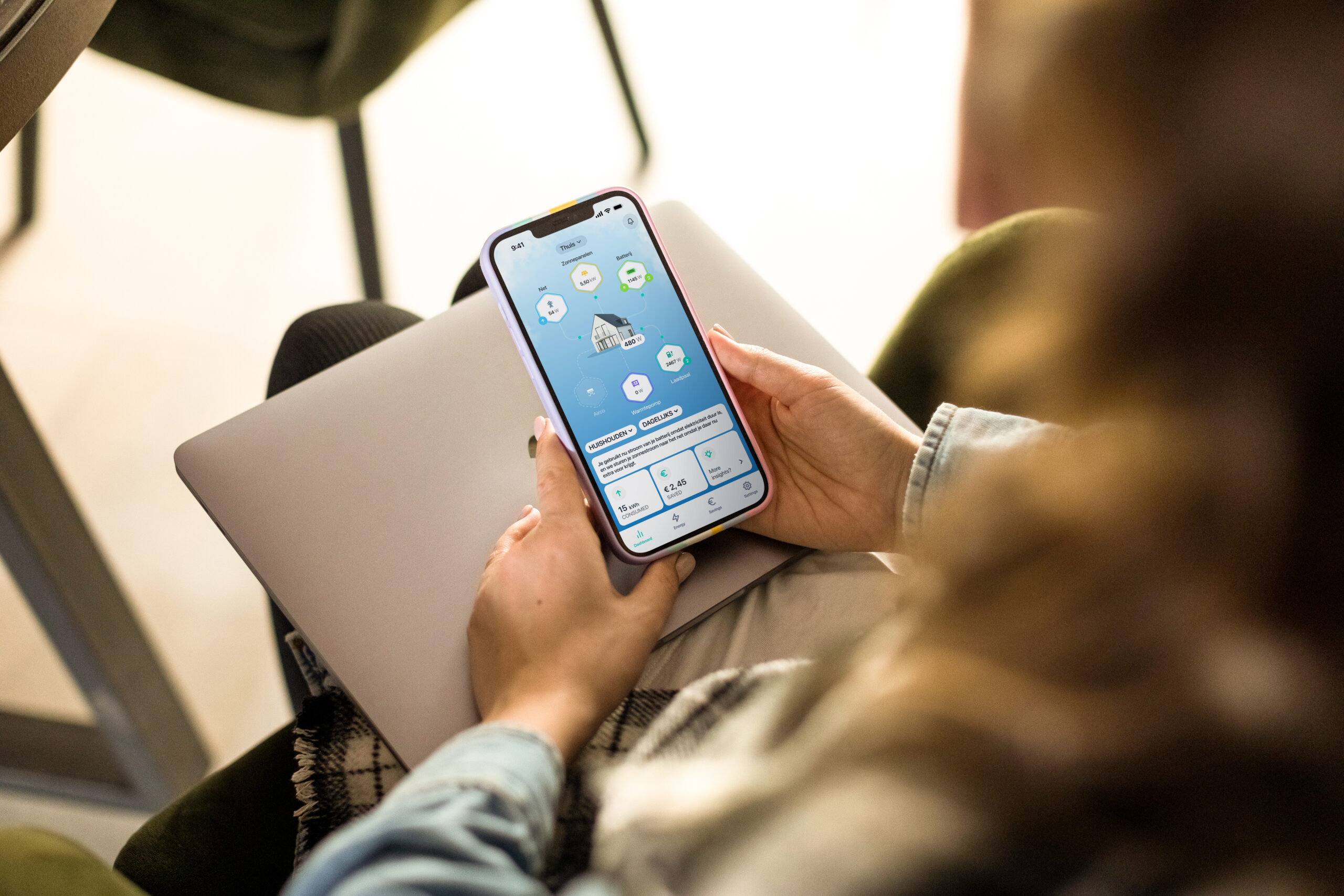
EnergyKing has its own energy management system. With the KingConnect gateway, you can intelligently control not only your charging station(s), but also your solar panels, home battery, and even your heat pump—all from a single app.
More than just an installer
EnergyKing is your partner for all your home’s energy needs: heat pumps, air conditioning, solar panels, home batteries, and charging infrastructure. A home battery is already a major step, and if you want to take it further down the road, you’ll have everything you need from a single, reliable partner.
Certified Installers
EnergyKing is a licensed and RESCert-certified installer. Your heat pump will be professionally installed in accordance with current standards, which is also a requirement for eligibility for the incentive.
- Smart Control
Get the most out of your home battery
There is a big difference between a battery that simply charges and discharges and one that is intelligently managed. With the right management, you can ensure your battery makes the most cost-effective choice at all times.
Energy Management System
KingConnect is an energy management system developed by EnergyKing. The system continuously monitors your consumption, your energy generation, market prices, and weather forecasts, and determines at any given moment whether charging, discharging, or waiting a bit will yield the greatest benefit.
Dynamic energy contract
With a dynamic contract, the electricity price changes every 15 minutes: sometimes electricity is very cheap or even free, and sometimes it’s expensive. Your battery adjusts to these changes, allowing you to save up to 30% more.
KingConnect charges when electricity is cheap and discharges during expensive peak hours. What if there isn’t enough sunlight, like in the winter? In that case, your battery will still charge using the cheapest grid power, so you can use cheap electricity in the evening during the most expensive hours.
- FAQ
Everything You Want to Know About a Home Battery
We're happy to help you get started. Below, you'll find answers to the questions we're frequently asked about home batteries.
What is the lifespan of a home battery?
A high-quality home battery typically lasts for 6,000 to 10,000 charge cycles. One charge cycle consists of one full charge and one full discharge. In practice, you’ll average one charge cycle per day: you charge using solar energy during the day and discharge again in the evening. At that rate, it will take 15 to 25 years to reach that number of cycles—well longer than the average payback period.
Although capacity does decrease slightly over the years, a good battery will still retain a large portion of its original capacity even after thousands of cycles.
Is trading on the imbalance market a good idea?
On the balancing market, your battery is used to keep the power grid in balance: it charges when there is too much power on the grid and discharges when there is a shortage. You are compensated for this, which essentially provides an additional source of return on top of your self-consumption.
In practice, that added value is often disappointing. The high network costs and the extra wear and tear on your battery usually outweigh the benefits of trading.
In other words: selling energy from your battery is, in most cases, much less profitable than simply using it for your own consumption. That’s why EnergyKing focuses on what does pay off every day: maximizing your own use of solar energy and smoothing out your peaks.
Do I need a dynamic energy contract?
No, you don't need one; a home battery is still worth it even with a fixed-rate contract: you can store your excess solar power and use it yourself in the evening.
But with a dynamic contract, you’ll clearly save more on your battery. When you don’t have enough solar energy to charge your battery (as is often the case in winter), you buy extra electricity during the cheapest times of the day and use it when prices are higher again. This way, you can maintain a high return on investment even during the darker months, precisely when your solar panels aren’t producing much. A dynamic contract isn’t mandatory, but it does make your battery a lot more cost-effective.
Do you also sell rechargeable batteries?
No, EnergyKing only installs permanently installed home batteries. A plug-in battery—the kind you plug into a standard outlet—may seem appealing because it’s inexpensive and simple, but in practice, there are significant drawbacks:
- Risk to your outlet. A standard outlet is not designed to handle high wattages continuously. This can lead to overheating and, in the worst case, a fire hazard.
- It only works on one phase. A plug-in battery is connected to a single circuit. If you have a three-phase connection, it only powers the appliances on that phase. If your washing machine is connected to a different phase, it will still draw electricity from the grid at the standard rate.
- Limited smart control. Plug-in batteries are much harder to control precisely, which means you can't optimize them to match your consumption, your energy generation, and electricity prices.
- Insufficient capacity to handle your consumption. Due to their limited capacity, they can barely handle your consumption peaks, even though that is precisely what accounts for a large portion of your savings on the capacity charge.
As a result, the efficiency of a plug-in battery is significantly lower than that of a full-scale, permanently installed system. If you really want to make the most of your solar energy and store it safely, you’re better off choosing a battery that’s professionally installed and intelligently controlled.
Will my home battery serve as a backup during a power outage?
Not automatically. A standard home battery is connected to the grid and, for safety reasons, shuts down when there is a power outage. This is a legal requirement: it prevents electricity from flowing back into the grid while grid technicians are working.
If you want your battery to keep working in the event of a power outage, you'll need a separate backup system (emergency power module) that disconnects your home from the grid during the outage.
Is a home battery safe?
Yes, the home batteries installed by EnergyKing use LiFePO4 (lithium iron phosphate) cells. This cell chemistry is known for being exceptionally stable and is much less susceptible to overheating than older types of lithium batteries. In addition, a built-in battery management system (BMS) continuously monitors temperature, voltage, and current, and takes immediate action in the event of an anomaly.
The chance that your home battery will catch fire is extremely small. To put it in perspective: you’re more likely to be struck by lightning in your lifetime than your home battery will ever catch fire.
Is a home battery cost-effective in the winter?
That's true, although the efficiency works a little differently in the winter. During the darker months, your solar panels produce very little energy, so you'll barely be able to charge the battery with your own solar power.
With a dynamic contract, you can take advantage of price fluctuations in the energy market: you charge the battery when electricity is cheap (for example, at night or during hours when the price is low or even negative) and use that energy when prices peak. In addition, your battery continues to smooth out your peak consumption even in the winter, which reduces your capacity charge bill.