 Skip to content
For businesses, energy management isn’t just about how much electricity you use, but also when you use it. Especially for businesses with a medium-voltage connection, even a brief period of very high consumption can have a significant impact on grid costs.
A number of charging stations charging at the same time, machines starting up simultaneously, or an HVAC system drawing a lot of power all at once: these are situations that can quickly cause a high 15-minute peak. And that’s exactly where an important point comes into play: a single 15-minute peak determines your monthly peak.
What is a 15-minute peak?
Your electricity consumption isn’t just measured in kilowatt-hours (kWh), which is the amount of energy you use. Your power consumption, measured in kilowatts (kW), also plays an important role. A “quarter-hour peak” refers to the average power you consume over a 15-minute period. Of all the 15-minute periods in a month, the highest average power consumption is your monthly peak.
Here’s a simple example: Suppose a company consumes between 240 and 280 kW for most of the month. At a certain point, several machines start up at the same time, multiple electric vehicles are charging, and the HVAC system kicks in. The average power consumption rises to 340 kW for a quarter of an hour. That 340 kW then becomes the monthly peak. So the company doesn’t have to consume 340 kW for the entire month to have a high peak. Just one quarter of an hour can be enough.
Why is that one peak so important?
The monthly peak plays a role in the calculation of grid costs. As a result, an exceptionally high consumption period can have a greater impact than you might expect at first glance. For businesses with a medium-voltage connection, the requested capacity is also important. This is the capacity you request from your grid operator for your connection.
If your actual quarter-hourly peak exceeds the requested access capacity, this can affect your costs. If you exceed the limit, you’ll be charged a penalty—not just for that month, but for the following 12 months. During the following 12 months, you’ll therefore have to factor in higher grid costs. A brief peak isn’t necessarily a one-time cost; its impact can be felt for much longer.

What causes a high spike in business?
A high quarter-hour peak often occurs because various energy consumers are active at the same time. Consider, for example:
- multiple electric cars charging at the same time
- machines that are started up simultaneously
- industrial facilities that require a lot of power
- HVAC and Refrigeration Systems
- battery systems that charge at an inopportune time
Individually, these consumers do not necessarily pose a problem. It is primarily their simultaneous use that can cause a high peak. As a result, a company can have a relatively stable energy profile and still cause a significant spike from time to time.
Want to avoid peak demand? Look at the big picture
The solution isn't necessarily to use less energy. Often, you can achieve a lot just by spreading out your energy use more efficiently.
- Avoid Starting Large Power Consumers at the Same Time
When multiple machines or systems start up at the same time, power demand can spike temporarily. By staggering certain processes, you can prevent multiple large power consumers from being active at the same time. - Smart Management of Charging Stations
Electric vehicles account for an increasingly large portion of businesses’ energy consumption. When multiple vehicles are charging at maximum capacity at the same time, this can cause a significant spike in demand. By intelligently distributing charging capacity, you can ensure that vehicles continue to charge without all of them drawing maximum power at the same time. - Using a Battery During Peak Times
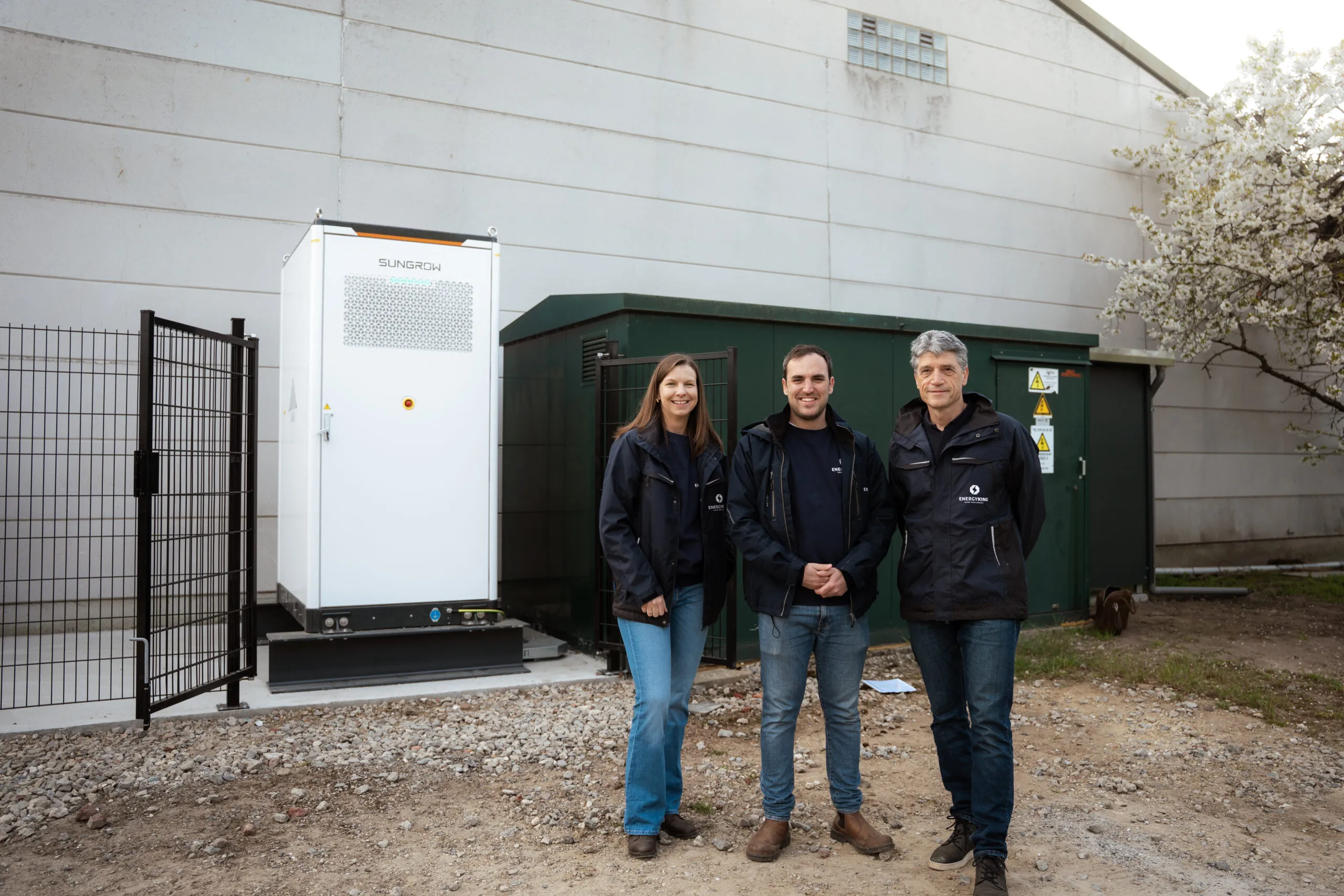
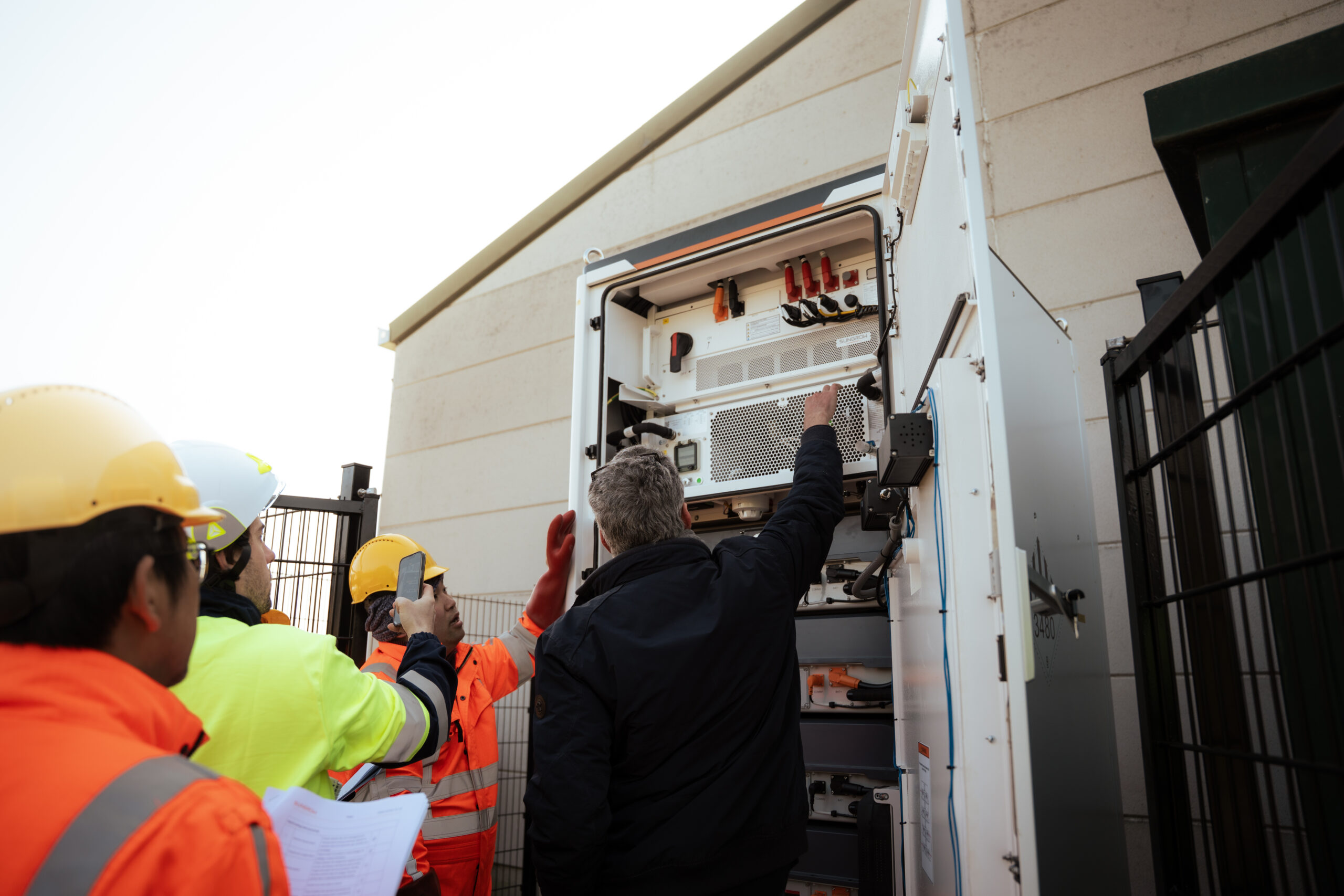
A battery can store energy when sufficient capacity is available and release that energy again when consumption temporarily spikes. In this way, the battery can help smooth out a high peak. This is also known as peak shaving.
From Measurement to Automatic Adjustment with an EMS
For companies with many different energy consumers, it is not feasible to constantly monitor what is happening on the power grid manually. This is where an Energy Management System (EMS) can play an important role. An EMS monitors your energy consumption and can intelligently coordinate various energy assets. For example, it can take into account your charging stations, battery, solar panels, and other major energy consumers.
Is your power consumption likely to spike significantly? If so, the system can intervene automatically. A charging station can temporarily have its power reduced, or a battery can supply energy to smooth out the peak. In this way, energy management becomes not just a matter of measurement, but also of smart control.

Peak shaving
The goal of peak shaving is not to shut down your business operations. The aim is to avoid unnecessary power peaks. Your total energy consumption does not have to change drastically as a result. The difference lies in how the power is distributed over time. By making adjustments at the right moment, you can limit an extreme 15-minute peak.
Our Expertise
Arianne Mertens, C&I Product Manager

“Grid costs due to peak demand are one of the most underestimated expense items on an energy bill. "Companies often focus primarily on their kWh consumption, but the monthly peak and the selected contracted power have at least as much of an impact on the bill."
“The good news: this is often where you can achieve the fastest savings without major investments. It starts with insight—knowing when your peaks occur and what causes them. From there, you can optimize your access capacity: not too high, because then you’re paying for capacity you don’t need, but certainly not too low either, because exceeding your limit results in penalties that can last up to 12 months. Finding that right balance is exactly what we help companies with.”
So watching it for a quarter of an hour isn't enough
An energy-efficient company doesn’t just look at the total number of kWh it consumes. Power demand and the times when that demand occurs are also important. A high 15-minute peak can occur in just a few minutes, but its impact can last much longer. That’s why it pays to not only analyze your energy consumption retrospectively, but also to actively manage it. With monitoring, smart control, and energy storage, you can better anticipate peaks and use your energy infrastructure more efficiently.
In short: it’s not just about how much energy you use, but also about when you use it.
Want to know where energy peaks occur within your company and how you can manage them more intelligently? EnergyKing helps companies with smart energy solutions and customized energy management.


