Skip to content
What are negative electricity prices?
Negative electricity prices occur when there is more supply than demand on the power grid. This happens, for example, on sunny or windy days, when solar panels and wind turbines together generate so much energy that the market is flooded with electricity. Or when demand for electricity is low, such as on weekends or holidays when many businesses are closed.
On the wholesale market, the price then drops below zero. These hourly prices are set one day in advance on what is known as the day-ahead market.
Why they don't always affect your energy bill
Negative electricity prices are particularly relevant for consumers with a dynamic energy contract, because their energy is billed hourly based on the market price. With a fixed-rate energy contract, you won’t notice any difference, and with a traditional variable-rate contract, the effect is limited, because the price is determined by the monthly average of market prices.
It’s important to understand that the negative prices you hear about usually refer to the spot price on the wholesale market. That’s the price per MWh at which suppliers trade electricity among themselves. As a consumer, however, you don’t pay that spot price directly; instead, you pay a total rate to your energy supplier, which includes various components:
- Spot Price (EPEX)
On the EPEX SPOT market, also known as the day-ahead market, hourly prices for the following day are determined based on forecasted supply and demand. - Energy Supplier Surcharge
Grid Costs: Elia and Fluvius rates for transmitting electricity through the power grid to your home or business.
Levies and Contributions Government levies such as the contribution for green energy certificates and the federal contribution.- VAT
Currently 6% on electricity for residential consumers in Belgium.
In other words: in most cases, your energy bill won't immediately show a negative balance, because in addition to the energy price per kWh, you always pay a fixed fee.
Best Times for Cheap Electricity
In general, the likelihood of negative hourly prices is highest on sunny or windy days, especially on weekends or holidays when consumption is lower.
In the summer, negative electricity prices usually occur during the day, especially between 10:00 a.m. and 4:00 p.m., when solar panels are operating at full capacity and demand is low.
In the winter, this happens more often at night, between 12:00 a.m. and 6:00 a.m., due to high wind power generation and low demand.
Why are negative electricity prices becoming more common?
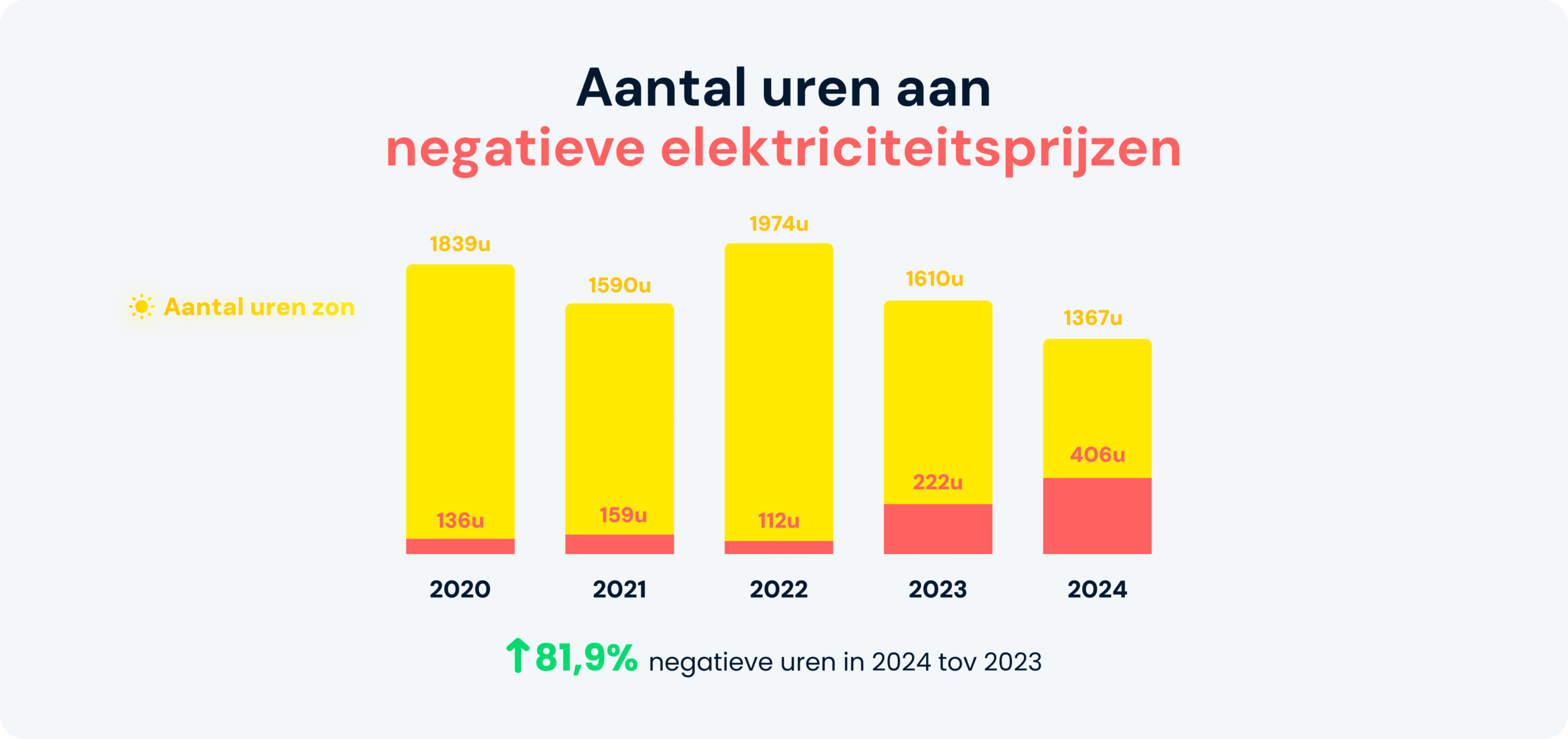
Negative electricity prices used to be rare, but in Flanders we’re seeing them more and more often on the energy market. This is mainly due to the rapid growth of renewable energy. Production from solar and wind power is highly dependent on the weather, while demand for electricity is often not as flexible. When supply exceeds demand, surpluses arise that drive electricity prices down sharply, sometimes even below zero. Currently, there are still not enough large-scale storage options to absorb those surpluses.
Negative electricity prices in 2025
August 2025 marks a milestone: the annual record for negative electricity prices in Belgium has already been broken. By mid-year, the total had already exceeded 400 hours of negative electricity prices, surpassing the 2024 record well before the end of the year.
On May 11, 2025, the price even hit a historic low. Between 1:00 p.m. and 2:00 p.m., the price dropped to -0.462 euros per kWh.
How can you take advantage of negative electricity prices?
Negative electricity prices can lower your energy costs, but only if you have a dynamic contract. Add a home battery or energy management system (EMS) to automatically shift your usage and take full advantage of the negative electricity prices. You can also avoid costs with solar panels by using smart controls.
Dynamic energy contract
To truly benefit from negative electricity prices, you first need a dynamic energy contract. With this type of contract, you pay by the hour based on the current market price, allowing you to immediately take advantage of cheap or negative hours. If you have a fixed-rate or variable-rate contract, you’ll notice little or nothing of negative prices.
Buying a Home Battery
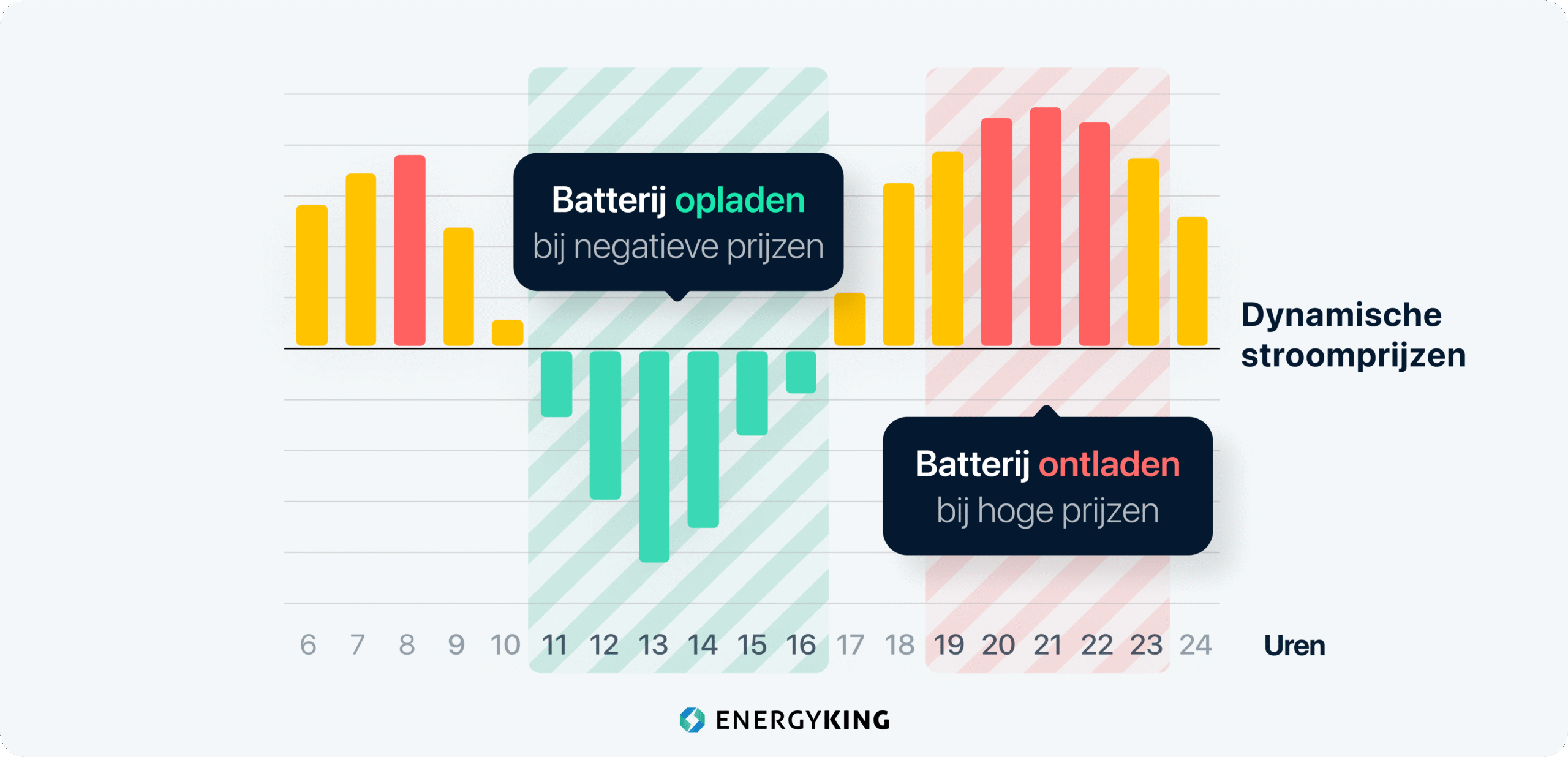
With a home battery combined with a dynamic energy contract, you can smartly take advantage of price fluctuations in the electricity market. You charge the battery during off-peak or even negative-rate hours and use that energy later, when prices are high. This way, you purchase electricity at the most cost-effective time and avoid expensive peak hours.
Energy Management System: Optimizing Your Energy Consumption
You can achieve even greater efficiency with an energy management system like KingConnect. Such a system automatically shifts your energy consumption to the cheapest hours and intelligently controls your devices using smart algorithms. It optimizes your consumption profile by automatically:
- Smartly control your home battery to charge during periods of low or negative electricity prices.
- Charging your electric car with the solar energy you've generated.
- Temporarily curtail your solar panels (limit their output) if feeding power back into the grid is more expensive than using it.
- Pre-heat or pre-cool your home using a heat pump or air conditioner during off-peak hours, so you'll use less energy later.
Thanks to this smart control system, you use more energy at the right time, avoid high costs when feeding power into the grid, and make the most of low-cost electricity.
Solar Panels: Preventing Feed-in Tariffs
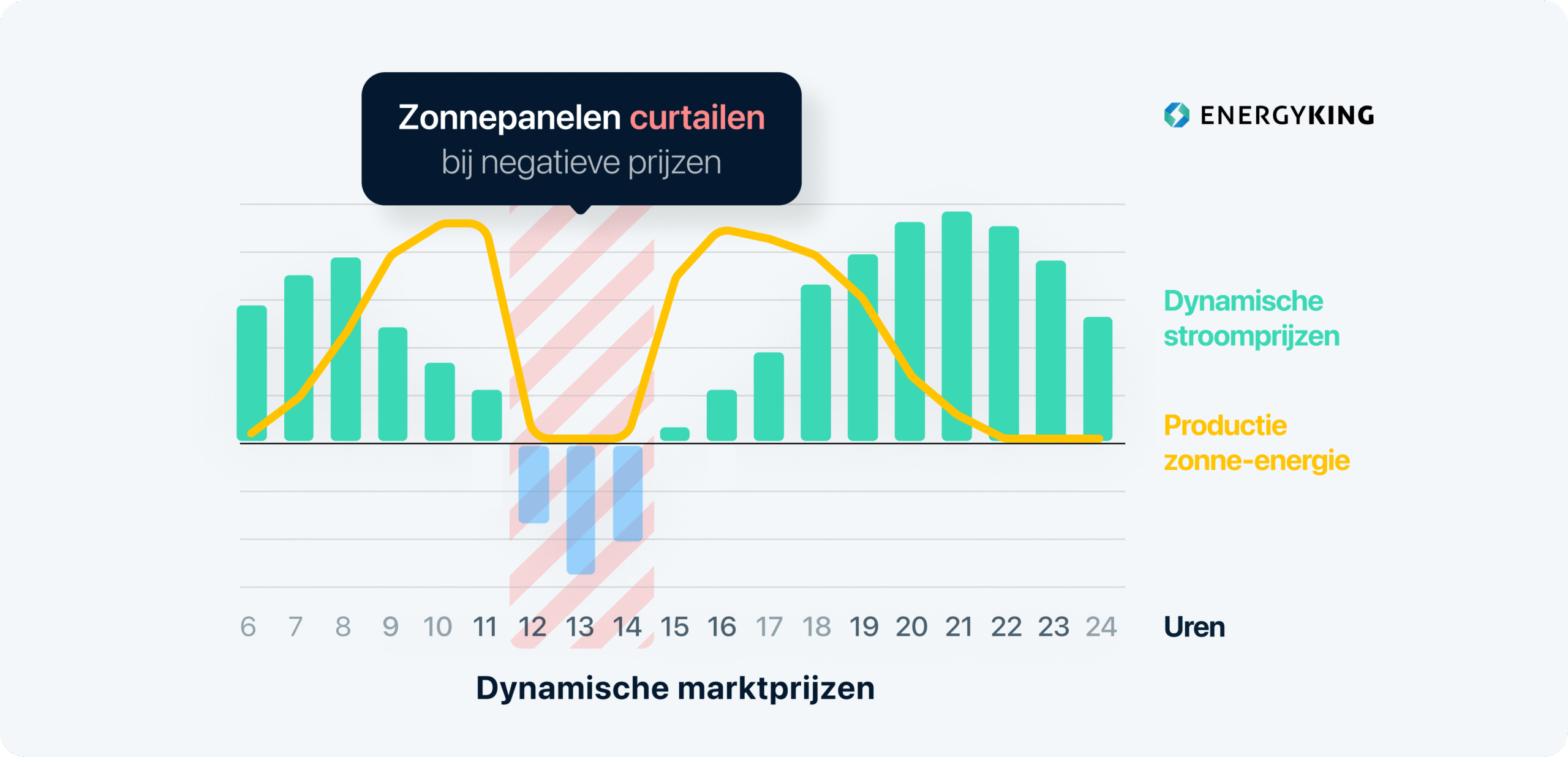
For owners of solar panels who have a dynamic contract, negative electricity prices can be a challenge. You want to avoid feeding solar energy into the grid when prices are negative. You can do this by:
- Increase self-consumption
Schedule the use of appliances such as washing machines, dryers, or dishwashers for times when your solar panels are generating a lot of power. - Usinga Home Battery as a Buffer
Store excess solar energy and use it later, when prices are higher. - Applying Curtailment
As a last resort, you can temporarily curtail production via an energy management system if the feed-in tariff is negative.