 Skip to content
Lower Your Energy Bill with a Heat Pump
Save on your monthly heating costs right away with a heat pump—suitable for virtually any home—and take advantage of attractive rebates of up to €8,000.
with 264 reviews

- How It Works
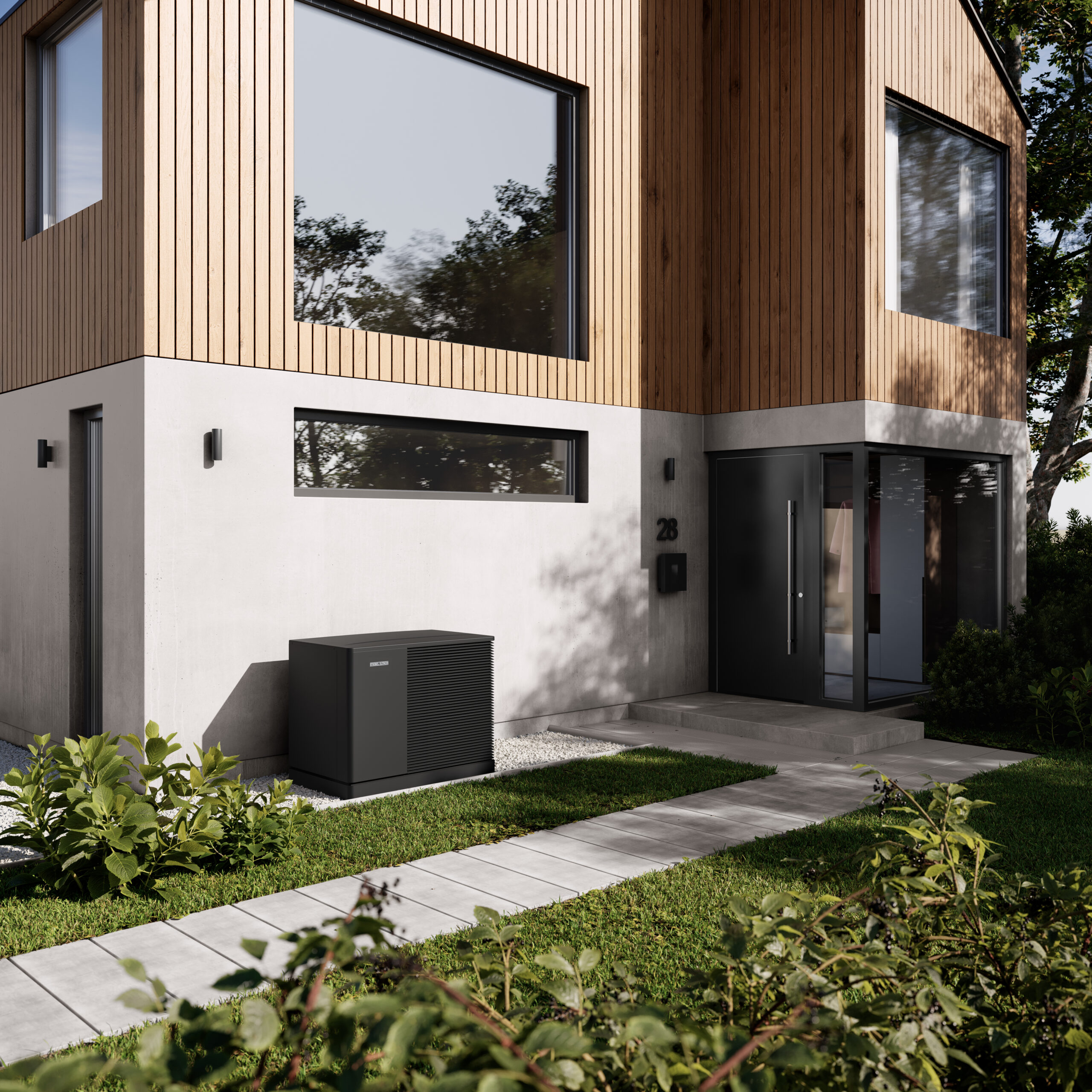
How does a heat pump work?
A heat pump extracts heat from the environment (air, ground, or water) and transfers it indoors to heat your home. This is done using a refrigerant that evaporates even at low temperatures. The vapor is compressed by a compressor, causing its temperature to rise sharply.
That heat is then transferred to your heating system. After that, the refrigerant cools down and the cycle starts over. This is how a heat pump transfers heat with very high efficiency and low energy consumption.
- Ideal for new construction or renovation
- To replace a combustion boiler that heats radiators
- Works efficiently with radiant floor heating
- Advantages
Why choose a heat pump?
A heat pump heats and cools extremely efficiently, lowers energy costs, and reduces CO₂ emissions. It’s a sustainable and future-proof investment.
Energy Efficiency
On average, a heat pump is 4 to 5 times more efficient than a combustion boiler.
Premiums
Thanks to subsidies and the reduced 6% VAT rate, the initial cost is now much lower.
Added Value of Your Home
A heat pump improves your EPC rating and thus increases the market value of your home.
- Types
Types of Heat Pumps
Find out which heat pump is best suited for your home.
Air-to-air (air conditioning)
- Quick to install and primarily used for cooling, but it can also provide heating
- You can feel the warmth or coolness right away
- Particularly suitable for apartments, renovations, or as supplemental heating
- Price range: from €1,800 to €9,000
- Does not provide hot water for domestic use
Air-to-water heat pump
- Uses outdoor air as a heat source and converts it into hot water
- For underfloor heating, radiators, and domestic hot water
- The most commonly used type of heat pump in Flanders
- Estimated price: from €10,000 to €20,000
Ground-water heat pump
- Extracts heat from the ground via vertical boreholes or horizontal collection systems
- Very high and consistent yields thanks to the stable soil temperature
- Particularly suitable for new construction projects with sufficient space and budget
- Price range: from €15,000 to €30,000
The real savings come from energy consumption
A heat pump draws most of its energy from the environment (air, ground, or water) and therefore consumes much less primary energy than, for example, a gas condensing boiler. Its efficiency is expressed as the COP or SCOP: the higher this value, the more heat you get on average per kWh of electricity consumed.
In addition, electricity is becoming structurally cheaper, while gas is becoming more expensive due to Flemish and European policies. Examples include the Flemish tax shift, ETS2, additional excise taxes, …
- Gas prices will rise steadily starting in 2028
- Electricity will become cheaper
- Europe aims to phase out gas entirely over time

Your energy bill will undergo fundamental changes by 2030
As a result of a series of policy changes at the European, Flemish, and federal levels, the energy bill for an average family will undergo structural changes starting in 2028.
- Natural Gas
- Electricity
- Flemish Tax Shift (2028)
- + €40 to €60
- - €30 to €100
- European Carbon Tax (2028)
- + €115 (or more)
- Federal Excise Tax Increase (2029)
- + €75
- - €35
- VAT Increase (2030)
- + €36 to €200
- Phase-out of Flemish green energy certificates (2030)
- - €95
- Total
- + €401
- - €200
- Project Type
Time for a heat pump
The future is fossil-free. New construction calls for sustainable choices, while renovation calls for smart upgrades. With a heat pump, you’ll be ready for stricter standards and maximum efficiency.
Renovation
When renovating, you can easily replace your existing gas boiler with a heat pump. Modern high-temperature heat pumps can reach output temperatures of up to 70 °C and therefore work perfectly with your current radiators.
New Construction
In new construction, the installation of gas boilers is no longer permitted in Flanders and Brussels. Furthermore, it is no longer possible to apply for a gas exemption, making heat pumps the new standard.

- Premiums
Receive up to €8,000 in rebates for your heat pump
Did you know that in Belgium you can receive rebates for installing a heat pump? Depending on your location, the type of heat pump, and your income bracket, you may be able to recoup a significant portion of your investment.
In addition, in most cases, heat pumps are currently subject to a reduced VAT rate of 6%, which makes the investment even more attractive.
- "My Heat Pump" Incentive (Flanders) up to €8,000
- RENOLUTION Grant (Brussels) up to €6,500
- Home Insurance Premiums (Wallonia) up to €3,600


- Reviews
What our customers say
More than 10,000 satisfied customers!

Excellent technical support. Quick quote and competitive pricing. Clean, high-quality work. A company I would recommend. Service first!

Fantastic team…the installation work was done very carefully…clear agreements that were honored…and very good prices, too! Top-notch company!!
Excellent service!
The quote, installation, and after-sales service all went very smoothly!

The most fantastic company I've ever worked with. From the customer service representatives on the phone to the installers—they all have just one goal: A SATISFIED CUSTOMER!
From the initial consultation to the installation, everything was perfect. Clear, accurate information; professional service. They really work with the customer to find the best solution. Highly recommended.
Perfect service. We received clear information in advance, including a site visit from the project engineer. The installation went very smoothly, and in my opinion, the staff was very knowledgeable.

I am extremely satisfied with the service provided. This company is customer-friendly, helpful in finding appropriate solutions, and highly competent.
Last week, Energyking installed a charging station at our home. The installation took place at the agreed-upon time, and the staff were friendly and professional.
We are very satisfied with our partnership with EnergyKing. Jo gave us a very clear explanation. Even after the installation, EnergyKing is always there for us!

A company you can count on! Efficient scheduling, friendly service, clear information both over the phone and in person, and always available to answer questions.

I just had an air conditioner installed by Energyking. Very satisfied!! Efficient workflow. Installed perfectly, finished neatly—and all at a competitive price!

Fast and professional service, and a very customer-friendly company! Thanks, Brecht, Joren, and Jan!
Energyking just finished installing a ground-water heat pump. For a relatively young company, they show a lot of maturity! I definitely recommend them.
I had an air conditioner installed by the team at Energyking. From our first contact through to the installation, everything went smoothly. Very professional work.
Everyone was very friendly, both on the phone and the people who came to give me a quote. Whenever I had questions, they were always there to help. I’m very satisfied!
Until March 2023, there was a 200% tax credit for companies that installed charging stations. They installed 22 professional charging stations. High quality, fast, and at a great price!

We are very satisfied with the proper and precise execution of the work, the fulfillment of agreements, and the responses to our questions and comments.
We contacted several companies about installing a charging station. We chose EnergyKing because their quote was clear and communication was smooth.
We're very satisfied with this partnership. Communication went smoothly, and our solar panels were delivered quickly (compared to other companies)! Top-notch service.
I had a very pleasant experience working with EnergyKing, which was recommended by a friend. Clear communication, quick installation, and the quote and invoice were straightforward.
A top-notch experience from start to finish. They followed through perfectly on all agreements, promises, and timelines, with excellent communication! I’m really, really satisfied with this company!

Our solar panels were installed last December. The technicians were very friendly and worked efficiently. I am very satisfied with my installation.

From the initial consultation to installation and inspection, everyone involved was highly skilled and knew how to get the job done. It was a complete end-to-end process with excellent communication throughout.

- FAQ
Frequently Asked Questions About Heat Pumps
Can you cool a room with a heat pump?
Yes, both air-to-water and ground-to-water heat pumps can also cool your home in the summer.
- In an air-to-water heat pump, this is achieved through active cooling, during which the system operates in reverse mode.
- With a ground-source heat pump, passive cooling is often possible as well, utilizing the natural coolness of the ground.
Important to know: A heat pump’s cooling capacity is less intense than that of a traditional air conditioning system. You shouldn’t expect a temperature drop of 10°C, but rather a pleasant reduction of a few degrees, which is often enough to ensure comfort on hot days. It’s ideal when combined with underfloor heating or fan coil units that are also suitable for cooling.
Does a heat pump also work in combination with high-temperature heating systems?
Heat pumps are most efficient when used for low-temperature heating systems, such as radiant floor heating or modified radiators.
But we also offer high-temperature heat pumps with a supply temperature of up to 70°C. They’re ideal for replacing your gas or oil boiler and work perfectly with your existing radiators.
Please note: these systems may consume more electricity than standard heat pumps. When renovating, we’d be happy to work with you to determine whether your existing heating system is compatible or needs to be replaced.
Do I need a permit for a heat pump?
In most cases, you do not need a permit to install a heat pump in your home. There are, however, a few exceptions:
- In some cases, ground-water heat pumps (with vertical boreholes) require a notification or permit from the Flemish Environment Agency, because drilling takes place underground.
- Air-to-water heat pumps generally do not require a permit, but you must take noise standards into account (especially if the outdoor unit is located close to a property line).
In the case of new construction or major renovations, the heat pump must, of course, be included in the EPB report.
How loud is a heat pump?
The noise level of a heat pump depends on the type of unit and where it is installed:
- An air-to-water heat pump has an outdoor unit that makes noise, similar to an air conditioner. At a distance of 5 meters, the noise level is usually between 35 and 50 decibels (comparable to a soft murmur or a refrigerator). Inside, you generally won’t be bothered by the noise, since the indoor unit operates very quietly and is usually installed in a storage room or utility room.
- A ground-water heat pump operates almost silently because it does not require an outdoor unit.

Waiting...
It costs money!
- Mix and match smartly
Get even more out of your heat pump
The payback period for a heat pump is strongly influenced by the cost of the electricity consumed. The lower your actual electricity rate, the greater the savings and the shorter the payback period.
Solar Panels
A heat pump runs entirely on electricity. By generating some of that electricity yourself with solar panels, you can significantly reduce your energy costs. In practice, this can save you about 25% on the total investment.
Home Battery
A home battery stores excess solar energy for later use. This allows your heat pump to run in the evening using solar energy you’ve generated yourself. This increases your self-consumption and lowers your energy costs.
Dynamic energy contract
A heat pump can be intelligently controlled based on dynamic electricity prices. The system provides additional heating during off-peak hours and reduces energy consumption when electricity is more expensive. This optimizes your overall efficiency.
- Our Blog
School of Energy


Do you have a problem?
We'll fix it today!
Please feel free to contact us. We'd be happy to help you!