 Skip to content
Network Congestion: From a Technical Problem to an Economic Challenge
For years, the power grid was taken for granted as a utility service. Today, that perception is changing rapidly. More and more companies looking to electrify their operations, expand, or invest in renewable energy are facing a new reality: grid congestion.
What used to be primarily a technical concern for grid operators is now increasingly recognized as astructural challenge for the economy. The rapid electrification of industry, mobility, and energy production means that, at certain times and in certain locations, demand for electricity is growing faster than the grid can keep up.
Companies are noticing this in practice through longer wait times for connections, restrictions on available capacity, or the need to energy management(EMS) more flexibly.
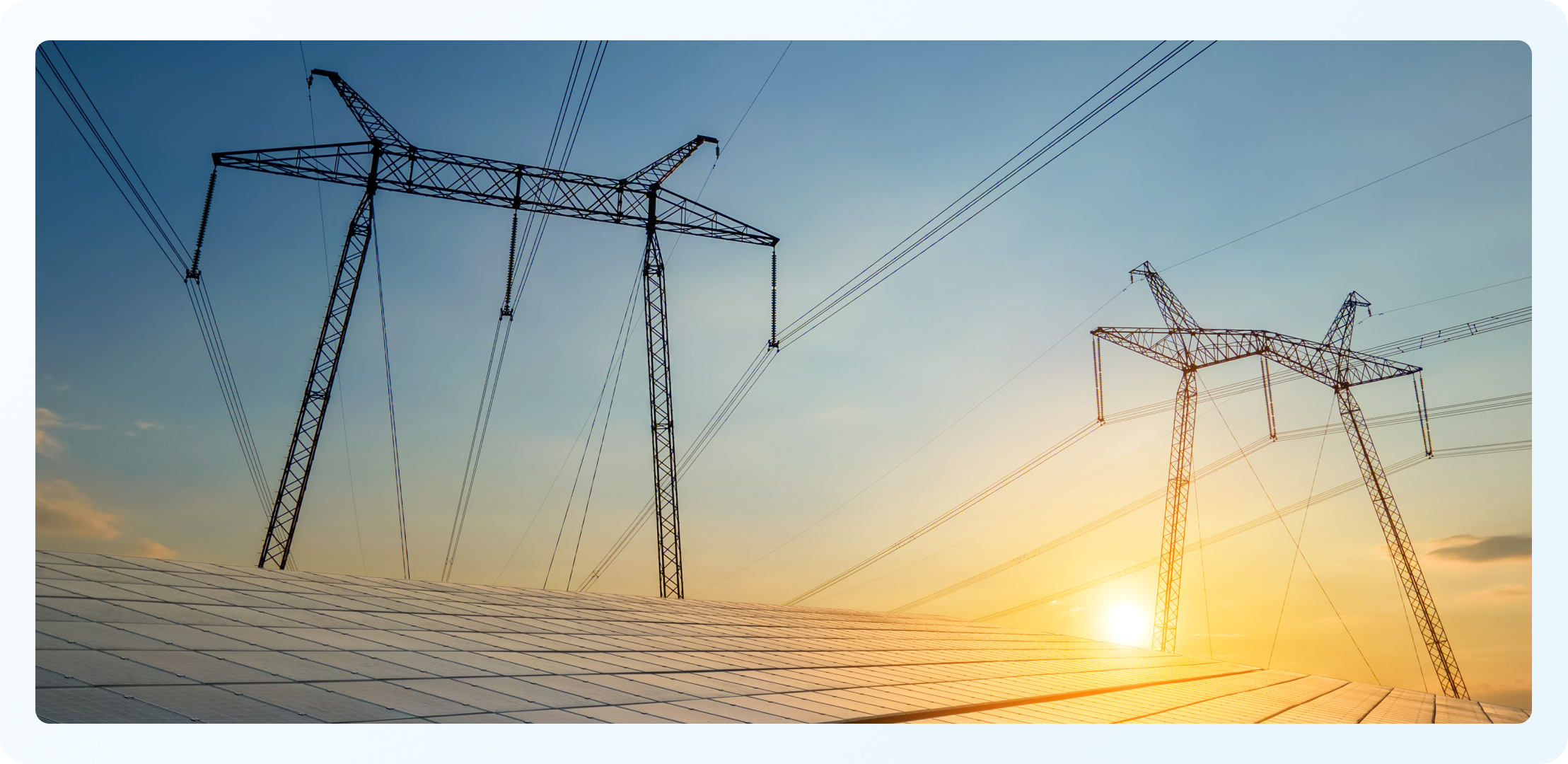
What is network congestion?
Grid congestion occurs when the demand for transmission capacity exceeds what the power grid can handle at a given time or in a given location.
A simple analogy is that of a highway. As long as traffic remains light, everything flows smoothly. As soon as too many vehicles use the same infrastructure at the same time, traffic jams form. It’s no different on the power grid: the energy is available, but the infrastructure cannot transport it everywhere at the same time.
Today, the impact is particularly noticeable among industrial consumers, logistics sites, charging infrastructure, and companies looking to expand or electrify their operations.
What causes network congestion?
Accelerated electrification of the economy
The Belgian economy is rapidly shifting toward electrification. Companies are replacing fossil-fuel-based processes with electric alternatives such as:
- electric commercial vehicles
- industrial heat pumps
- electrified production lines
- charging infrastructure for trucks
- Electrification of Logistics Sites
This trend is essential for the energy transition, but at the same time it is leading to a sharp increase in peak demand and connection requests.
New energy-intensive applications
In addition to traditional industries, new large-scale consumers are emerging, such as battery farms and data centers.
These projects fall under large-scale energy projects and often require very high power capacities at specific locations, which puts local grids under strain more quickly. Satisfied customers demonstrate how important a reliable partner is in the implementation of such complex energy projects.
A network that is evolving more slowly than demand
Expanding and upgrading power grids is a process that takes years due to permitting, studies, and infrastructure projects. This creates a structural gap between the pace of electrification and the pace at which grid capacity can be expanded.
Elia. (2026). What is grid congestion?
What are the consequences of network congestion for businesses?
Delayed investments
Expansion projects, such as new production sites, warehouses, or loading areas, may be delayed if additional capacity is not immediately available.
Greater Uncertainty in Investment Planning
Companies are increasingly having to make decisions without certainty about future grid capacity, which makes strategic planning more complex.
Economic Impact
When electrification and growth are held back by limited grid capacity, this indirectly hinders innovation, competitiveness, and economic development.
Why Belgium Doesn't Want the Same Scenario as the Netherlands
Today, the Netherlands is considered the best-known example of a market where grid congestion has become a structural issue.
In various regions, companies have to wait years for a new connection or an increase in their capacity. This has led to a situation in which not only infrastructure but also economic growth is under pressure.
This risk is also clearly recognized in Belgium. Grid congestion is no longer viewed as a temporary bottleneck, but as a structural consequence of the energy transition. That is why the focus is increasingly shifting toward a two-pronged approach: on the one hand, strengthening the grid, and on the other, using existing capacity in a smarter and more flexible way.
This shift means that companies must not only plan for future grid expansions, but also start thinking today about how they can optimize their energy consumption within existing constraints.
Solutions to Grid Congestion
Network congestion cannot be resolved with a single measure. It requires a combination of technological and organizational solutions.
Flexible connections
Companies are increasingly being granted access to the grid on the condition that they can temporarily adjust their consumption during peak periods. This allows for better utilization of the existing infrastructure and enables more companies to be connected.
Smart Energy Management
More and more companies are shifting from “requesting more power” to “using power more efficiently.”
By actively monitoring energy consumption and smoothing out peaks, it is often possible to achieve significantly more operational capacity within the same grid connection.
Battery Storage
Battery storage are playing an increasingly important role in the energy system. They store energy when demand is low and feed it back into the grid during peak times. This reduces the load on the grid at critical moments and allows for more efficient use of the existing grid connection.
Local Energy Production
Solar energy remains a key pillar of the energy transition. Not only for the sake of sustainability, but also because locally generated energy puts less strain on the transmission grid than centrally generated electricity.
Smart Charging of Electric Vehicles
Charging infrastructure can cause significant peak loads within companies. By combining smart charging with available power capacity and operational priorities, vehicles can be charged efficiently without placing an additional burden on the grid.
 EnergyKing's Vision
Grid congestion is not a temporary technical problem, but a logical consequence of an energy system in transition. The companies that will be most successful in the coming years are not necessarily those with the largest grid connections, but those that manage their energy most intelligently.
That is why we see three strategic pillars:
- local energy production
- energy storage
- smart energy management
The combination of these three elements ensures that companies become less dependent on grid upgrades and are better able to adapt to an energy system that is becoming increasingly dynamic.
Our expert, Matthijs De Maeyer

“Today, when it comes to investments in solar panels and specific battery systems, there is—above all—a logical focus on financial considerations, particularly regarding the return on investment of such installations.”
Due to two factors—namely, falling battery cell prices and rising energy costs—we have reached a tipping point where the return on investment now has a very realistic timeframe (usually between 5 and 7 years).
In the future, investments in in-house energy production and storage will become an operational consideration in addition to return on investment. Due to grid congestion, these investments will become a necessity when deciding whether to expand a production line or activity—or not to do so at all.
Just recently, I came across a plastics manufacturing company that’s doing very well in terms of growth, but simply can’t expand its production line because it was reaching the limit of its electrical connection, and the grid operator Fluvius indicated that it could take several more years before they could secure additional capacity. In practical terms, the choice is this: either not expand production (and miss out on growth) or set up their own energy production and storage to handle the peaks from the additional production line, thereby enabling them to expand and grow.
"Given an economic climate in which Belgian companies face competitive challenges due to a variety of factors, we need to find solutions to address this additional physical barrier to growth—solutions that, fortunately, already exist and that we are working on every day."
Conclusion: How can companies continue to grow despite network congestion?
Grid congestion is a structural consequence of the rapid electrification of our economy. Demand for electricity is growing faster than the infrastructure can keep up, making flexibility and smart energy management increasingly important. For businesses, the challenge is shifting from “securing sufficient capacity” to “making the most of available capacity.”
Those who invest today in storage, control, and smart energy management systems are not only improving efficiency but also creating room for future growth within an increasingly constrained grid. Start using smart energy management today. Request a no-obligation quote and discover how your company can get more out of the available grid capacity.


